← Back to details
Overview
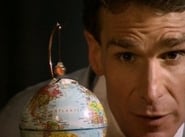
Let the moon master Bill Nye teach you the ancient and not-so-ancient secrets of the Moon. Wax on, wax off. The Moon grows bigger (waxes) and smaller (wanes) every 30 days or so. The word ""month"" comes from the word ""moon"". The Moon is the closest thing in space to Earth, and it's one of the most well-studied orbs in our solar system. We know that Moon rocks are rich in calcium and aluminum, that the Moon has no atmosphere, and that there are over a million craters on the Moon's surface. The Moon doesn't glow on its own, it reflects sunlight. Watch the Moon every night for a month as it grows, shrinks, and at one point disappears. The Moon doesn't actually change it's shape. It's the way the sun shines on the part of the Moon we see that makes the phases change. The Earth moves around the Sun, the Moon moves around the Earth. As the Moon moves through its orbit, the Sun shines on bigger or smaller portions of it. If you were looking at the Moon from the Sun, it woul
View full details → E1
E11. Flight
1993 · 26m
Things that fly need air. Even though we walk through it, breathe it, and sneeze it, air seems to be a whole bunch of nothing. But air is there, and it's powerful. Balloons inflate because air presses on the insides and outsides of the balloon. Air pressure in tires supports the weight of bikes, buses, trucks, cars, and planes. But air doesn't need to be inside something to exert pressure. Air that moves around pushes, too. What do birds, planes, kites, Frisbees, and helicopters have in common? They fly because moving air creates lift, or a push up. Airplane wings are shaped to push air down. The momentum of the air going down pushes wings up. Air above the wing gets going faster than the air underneath. Fast-moving air zips along, without pushing as hard side to side or up and down. The slow air pushes up from below harder than the fast air pushes down from above ... and you're airborne! Every flying thing, from the tiniest flying insect to the biggest airplane, us
 E2
E22. Earth's Crust
1993 · 26m
Don't just go with the flow. Settle down on the crust. Imagine a world without any crust. There would be no pies, just goopy filling, no bread, no hamburger buns, and no you or me. That's right. You, and every living thing we know of, live on or in the Earth's crust. And, living things need the Earth's crust to survive. Let's look at the science of the surface. By carefully studying the Earth's surface, scientists have discovered that the Earth is made up of gigantic layers. At the center of the Earth, there is a core – a big ball of solid metal mostly iron. The core is surrounded by a layer of liquid iron and other minerals. We usually just call it the outer core. The next layer, around the outer core is called the mantle. You may have seen a mantle above a fireplace. Well, the mantle is above the Earth's hot core places. The mantle is gooey hot nearly melted rock that flows the way asphalt does on a hot summer day. Scientists often say that the mantle is plastic. It